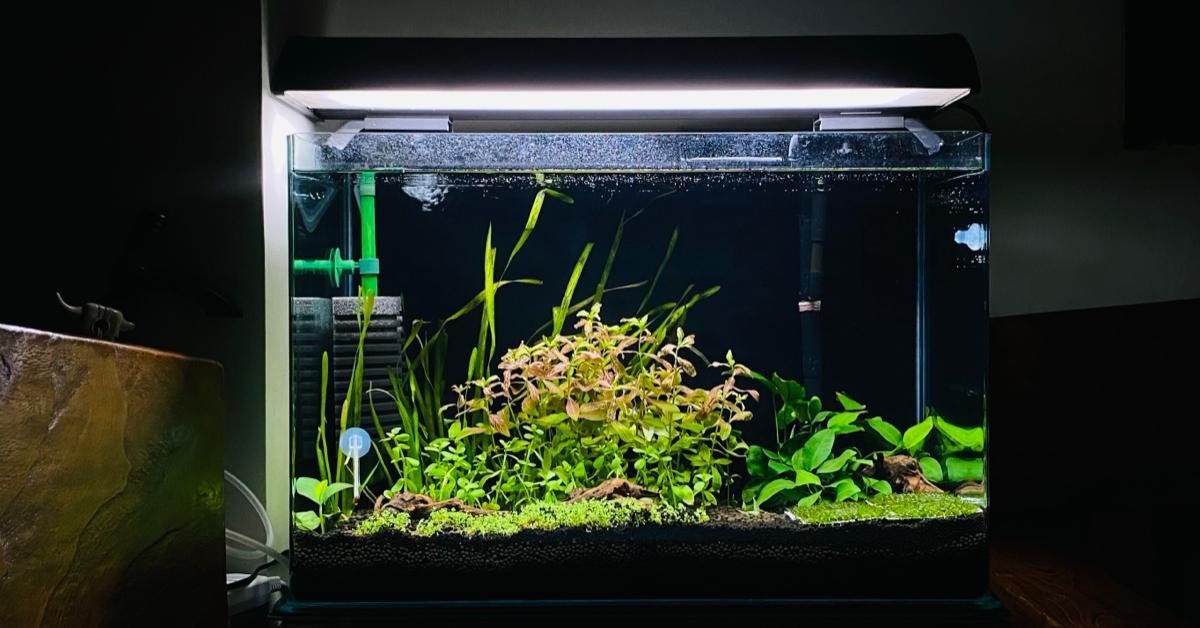
For this new tank I wanted to build a comfortable home for the shrimp—upgrading from an 18 cm nano tank to a 60 cm two-foot tank. Following the neocaridina shrimp guide, I held the temperature steady at 28 °C, planted aquatic plants, used dark substrate, and—drawing on practical tips from many hobbyists—chose a sponge filter plus a hang-on-back filter. Here’s hoping this setup succeeds! Below is a log of the tank setup and cycling process.
Cycling environment
Tank dimensions: 60 cm long, 30 cm wide, 45 cm tall. This is a two-foot tank, and I’m happiest with the height: shrimp are bottom dwellers, so flow in the upper water column affects them less, yet water still moves (a video of actual flow in the tank appears later).
Filtration: dual-outlet hang-on-back filter (brand and flow rate TBD), Tetra dual-outlet fan-shaped sponge filter, Wuwei round air pump 2000s.
Substrate: black aquasoil about 5–6 cm deep. Master Soil Japanese black soil 3 + 8 L (coarse grain) and Premium Soil Japanese black soil 3 L (fine grain). I had meant to use only Master Soil, but damaged packaging led the shop to substitute Premium. Both worked fine—but for someone picky about consistency, two different soil colors was maddening; I kept wanting to separate them.
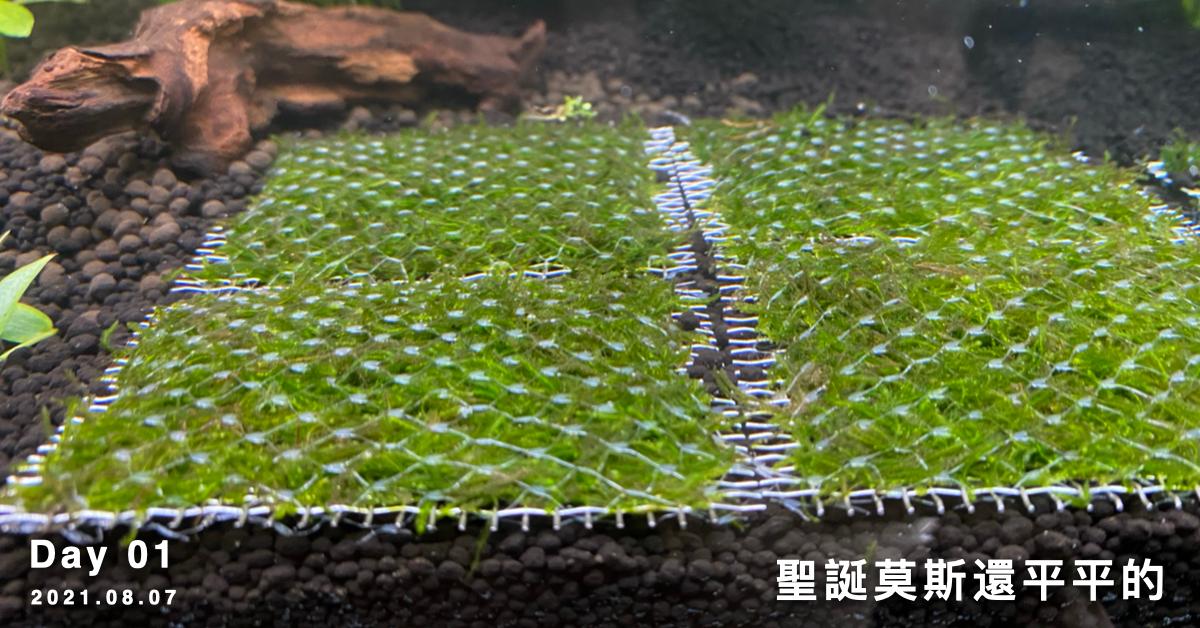
Other gear: 6 cm mini thermometer, mosquito netting (super important!), three mini purple-yuzu driftwood pieces, one mini moai statue with plants on its head.
Water source: Yilan, filtered water.
Plants: two Anubias nana, two Anubias petite, three stems of “red-leaf green-thread” stem plant, three pearlweed clusters, three Vallisneria, one box of loose Hemianthus callitrichoides ‘Cuba’, four patches of Christmas moss, two Microsorum ‘Windelov’, a few stems of Hygrophila polysperma ‘Rosanervig’, two unidentified plants.
Lighting: two Arcadia T8 tubes, Freshwater FF 18 (24" / 600 mm).
Photoperiod: on a timer, 6 hours per day.
Cycling fish: three yellow GloFish danios. I hadn’t planned to add cycling livestock, but mosquitoes were so bad I feared raising a tankful of larvae—so I borrowed three fish from Grandma (ha).
Note: the tank sits in the living room where eco incense burns daily and ventilation is limited, so some ash falls into the water.
For the tank setup and planting process, see My first 2 ft planted neocaridina tank: planting log.
Cycling is the first step toward a thriving tank
Cycling is absolutely vital for healthy fish and shrimp, and it tests the keeper’s patience. It isn’t just filling the tank and running the filter for seven days—what matters is establishing a solid nitrifying biofilter. Methods vary wildly, and plenty of “folk wisdom” exists; pick what fits your style and curiosity at this stage.
My personal setup approach
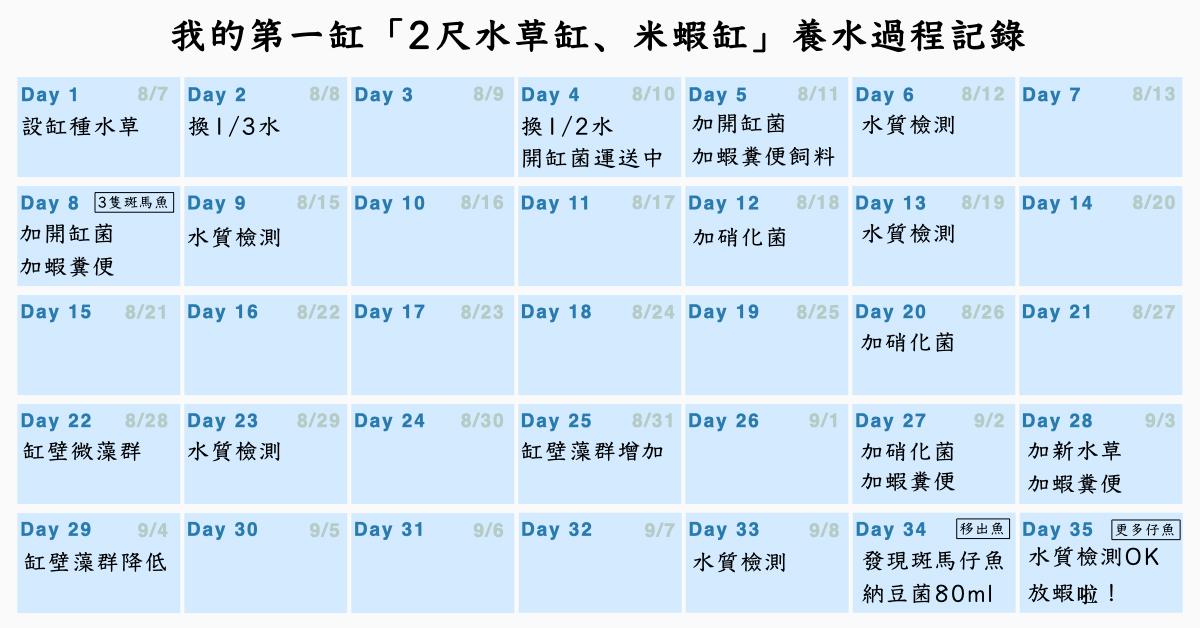
This cycle used PSBlab starter bacteria and nitrifiers: starter bacteria every three days (two doses total), nitrifiers every seven days (three doses). In the last few days I was so excited about receiving natto bacteria that I casually dumped in 80 cc, daydreaming that cotton candy algae might appear someday (ha—unlikely). Maybe there were too many plants—no algae bloom anyway. We’ll see!
The chart below summarizes what I did during cycling—mostly improvised. Experienced folks, feel free to share tips.
Day 1
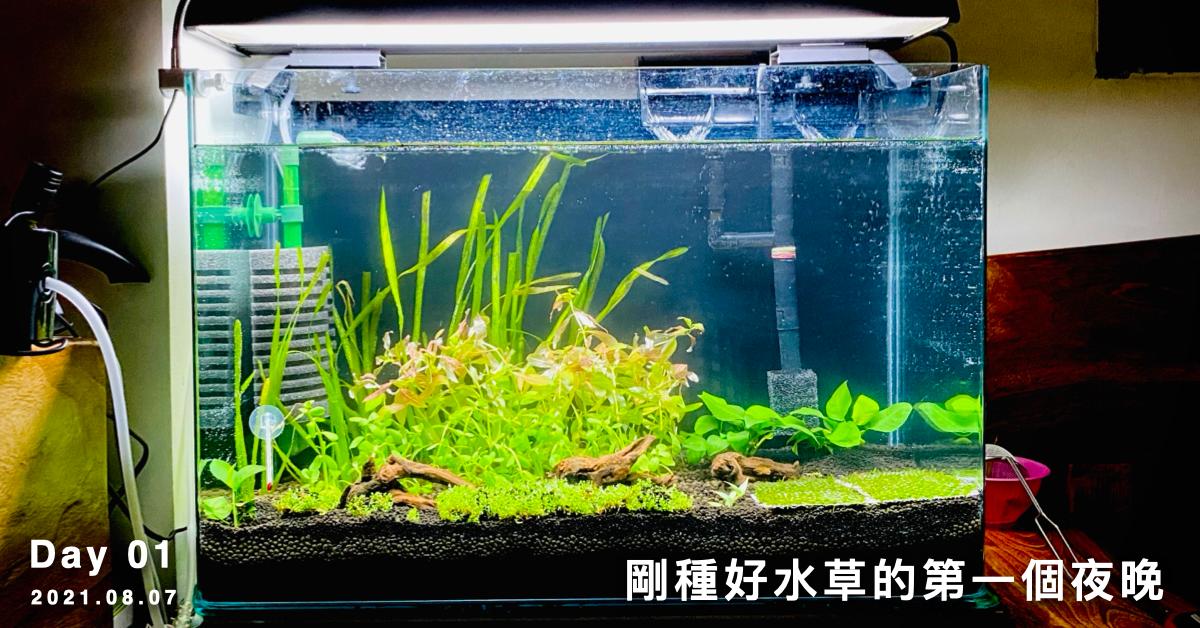
First time aquascaping: whenever a plant looked crooked I wanted to pull it up and replant. When it was finally done I was genuinely moved—I could sit beside the tank and feel happy for ages.
Day 2
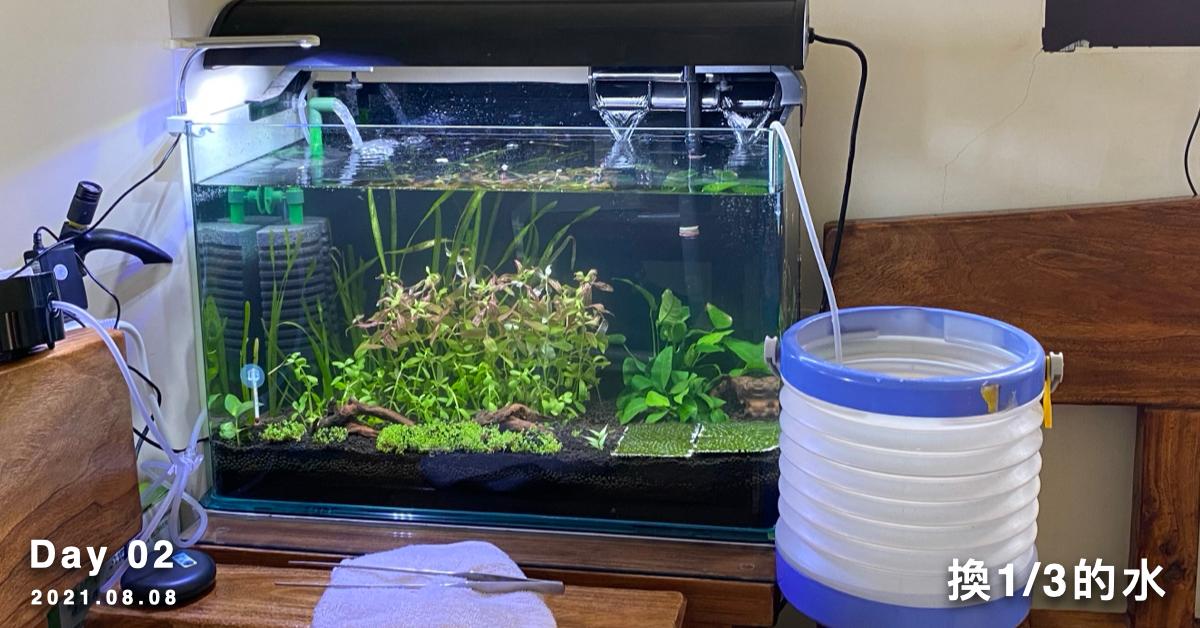
Online sources say a new tank may algae-burst during cycling, so the water shouldn’t be too rich—change water on a schedule. I meant to change half the volume, but water changes are tiring, so one-third it is.
Day 3
The HOB intake looked ugly exposed, so I borrowed a small Anubias from the next tank to hide it.
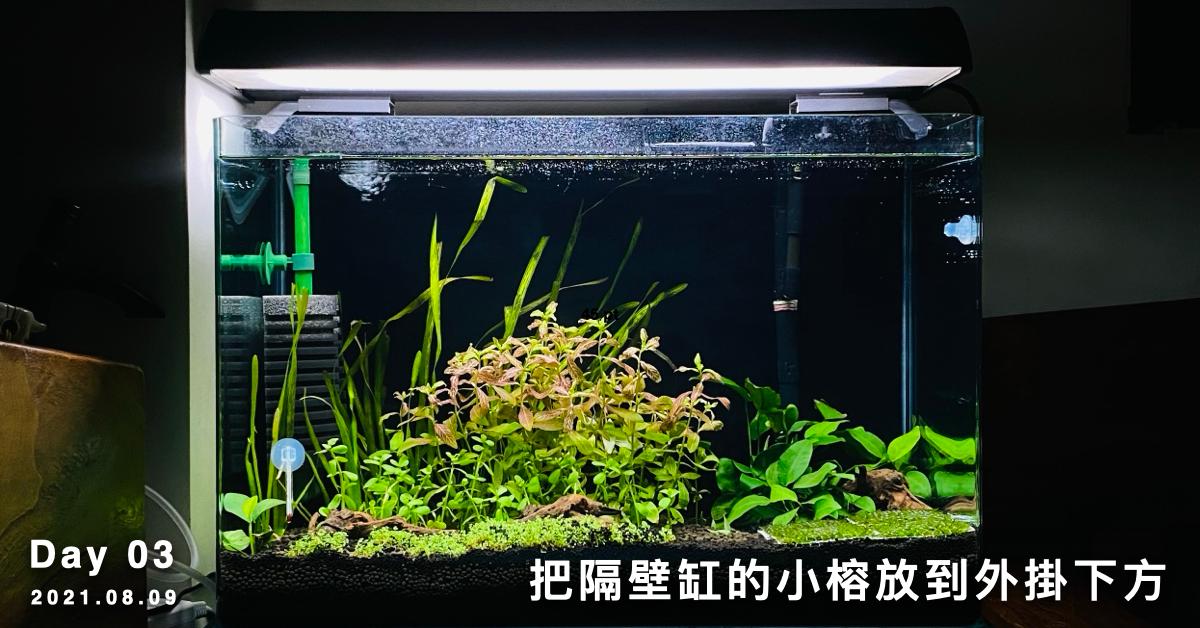
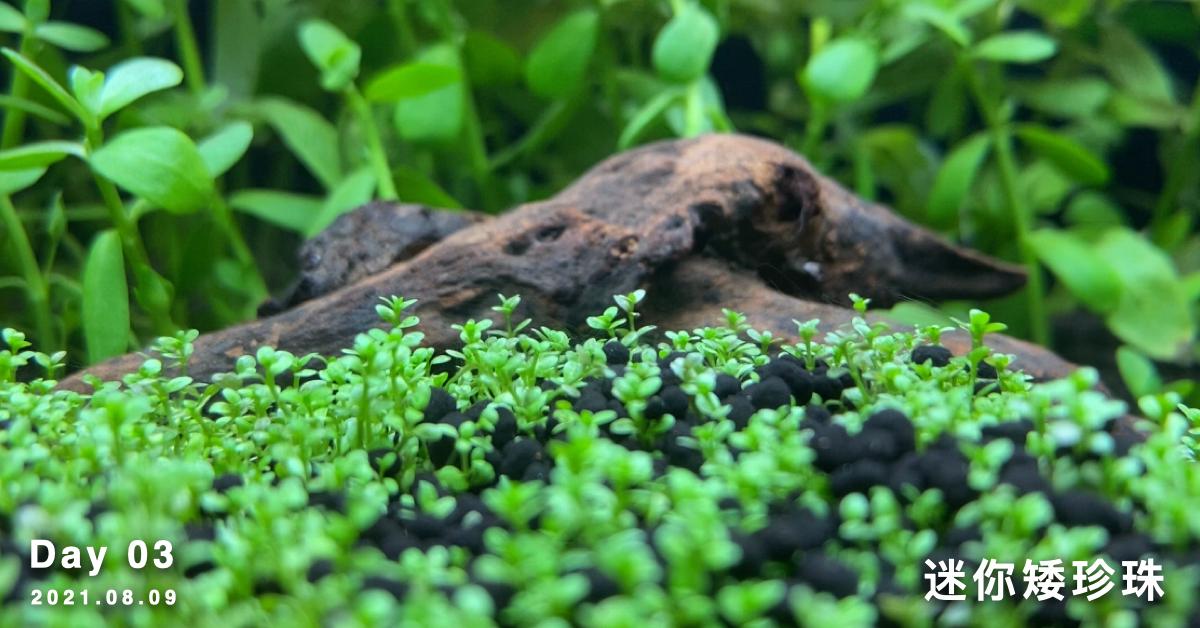
The HC carpet looked lush; it still had to transition from emersed to submersed growth, but this tank has no CO₂ injection—whether it would work was unknown. Worth a try!
Day 4
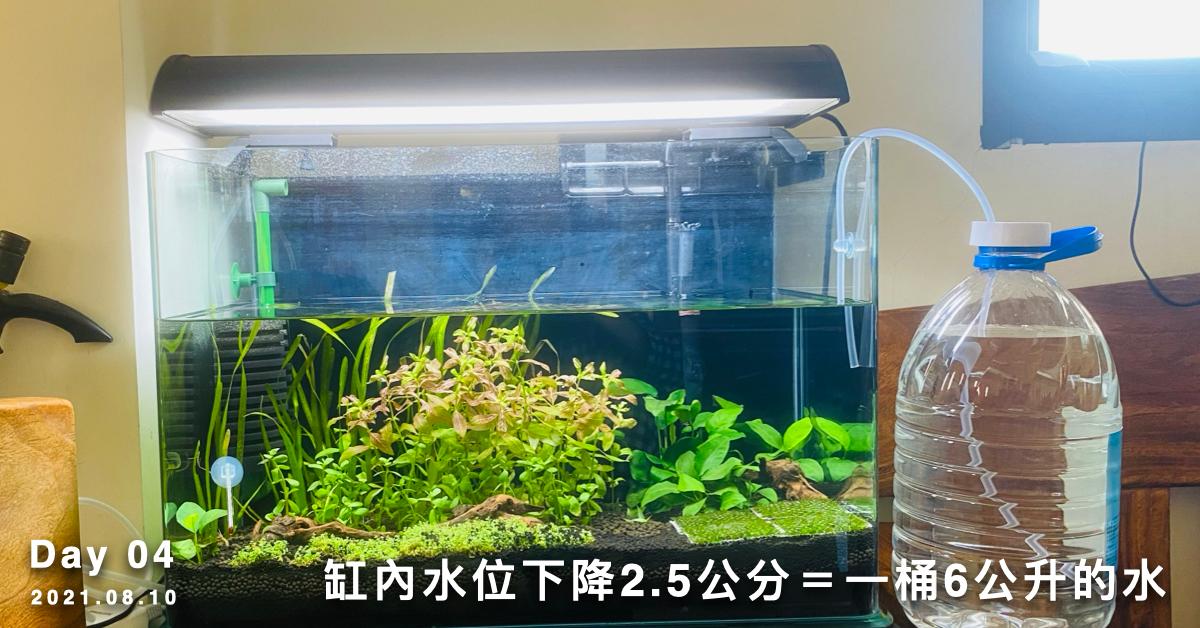
Changed half the water today, hoping not too much algae. PSBlab starter bacteria and nitrifiers were in transit. With no proper hose I used leftover silicone tubing—the tradeoff was a very slow drain.
Day 5
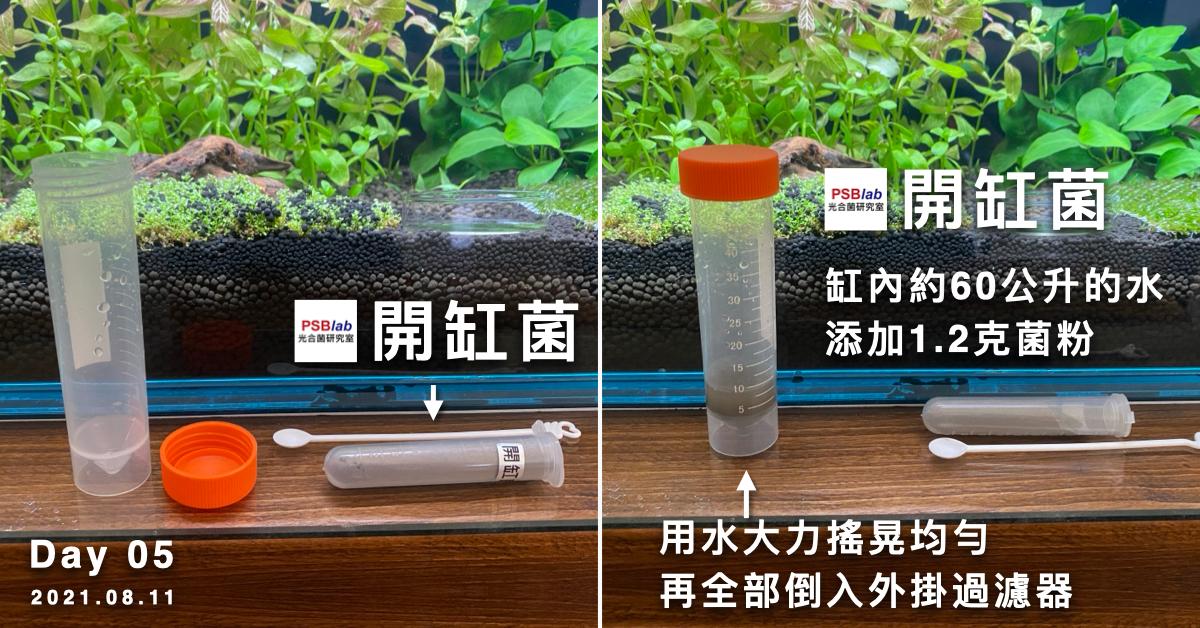
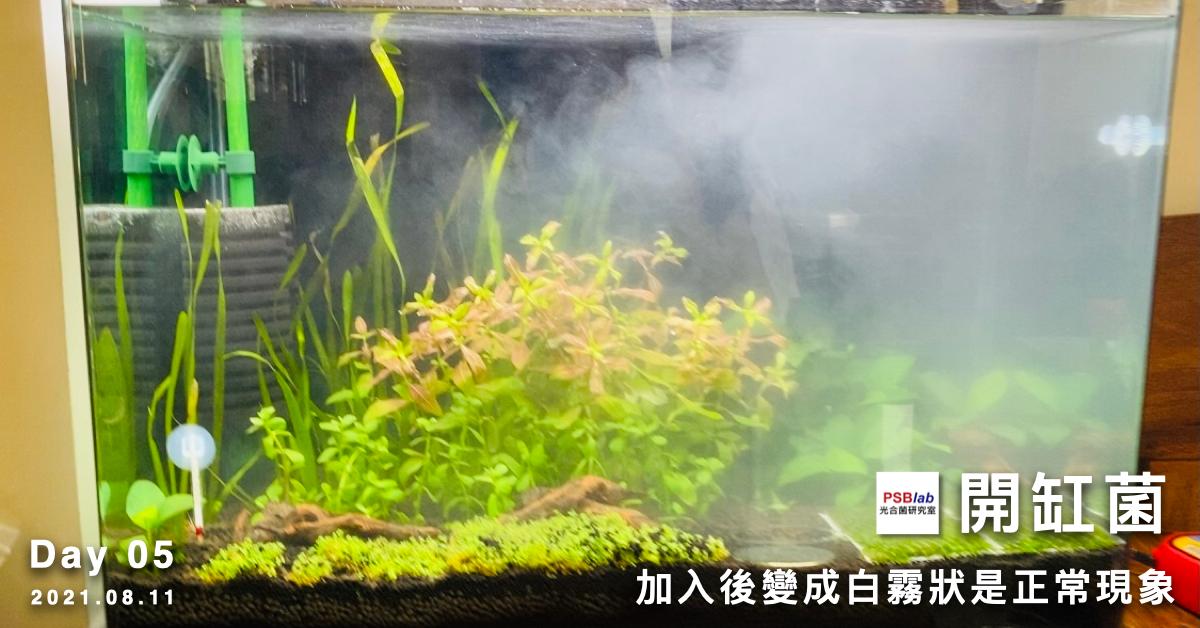
PSBlab starter bacteria arrived. This tank holds about 60 L, so each dose is 1.2 g of powder: put it in a small bottle, shake hard, then pour it all into the right-side HOB pad. I also siphoned shrimp waste from the nano shrimp tank and sprinkled it in as food for the bacteria.
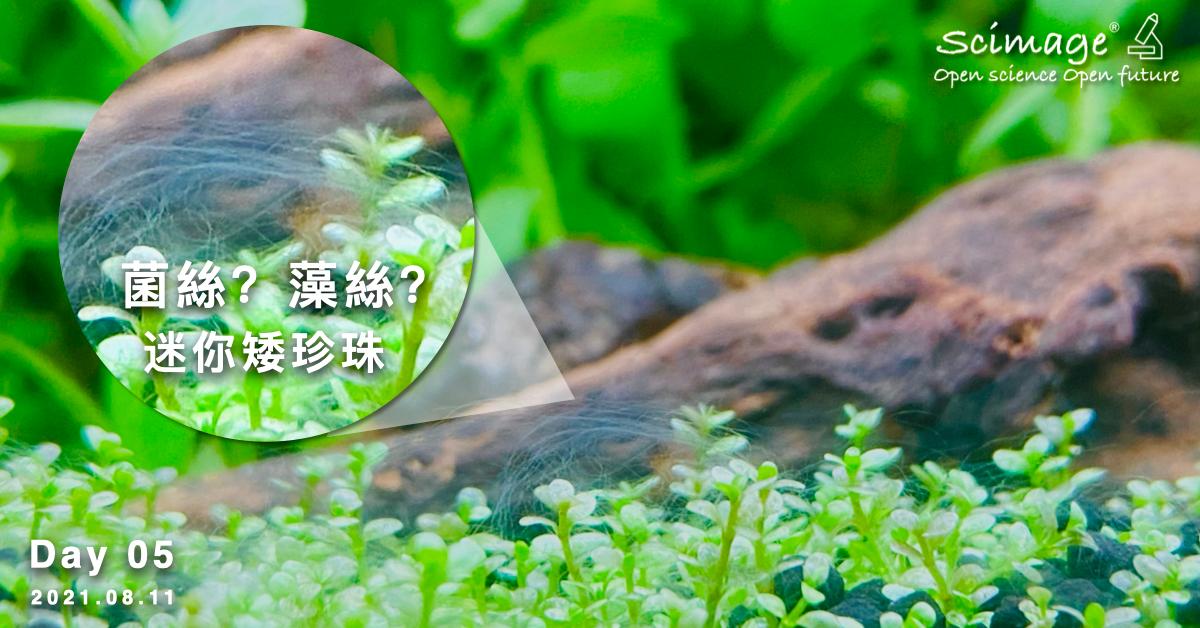
After a while the HC carpet sprouted many fine filaments.
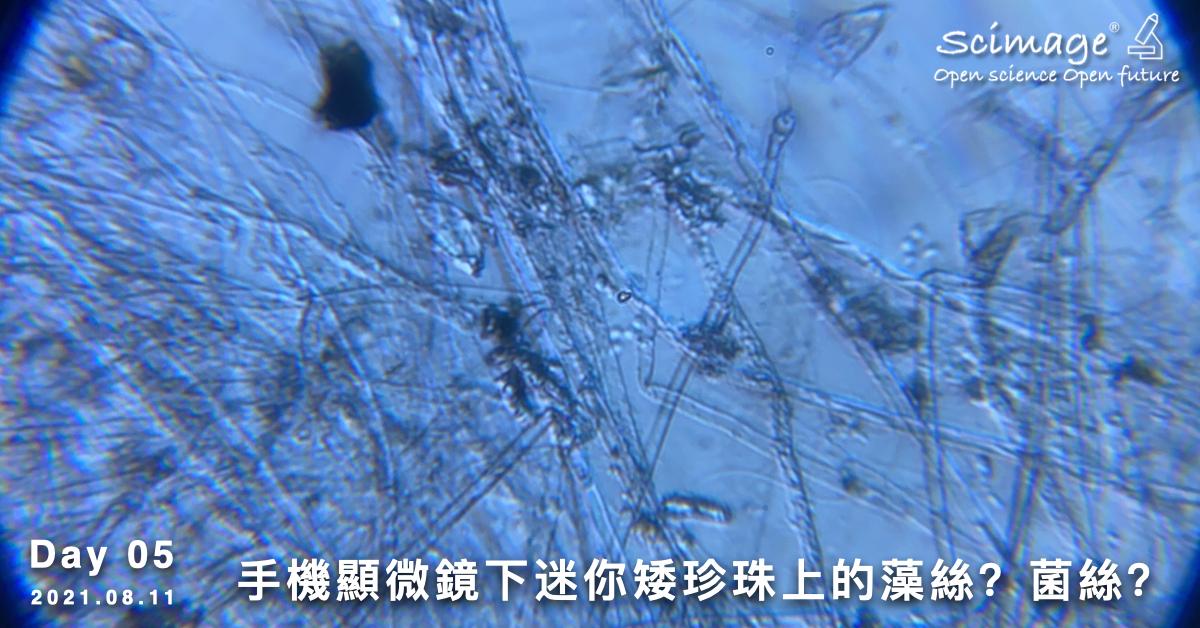
I pulled some filaments and checked them under a microscope—they didn’t really look like plant tissue.
Day 6
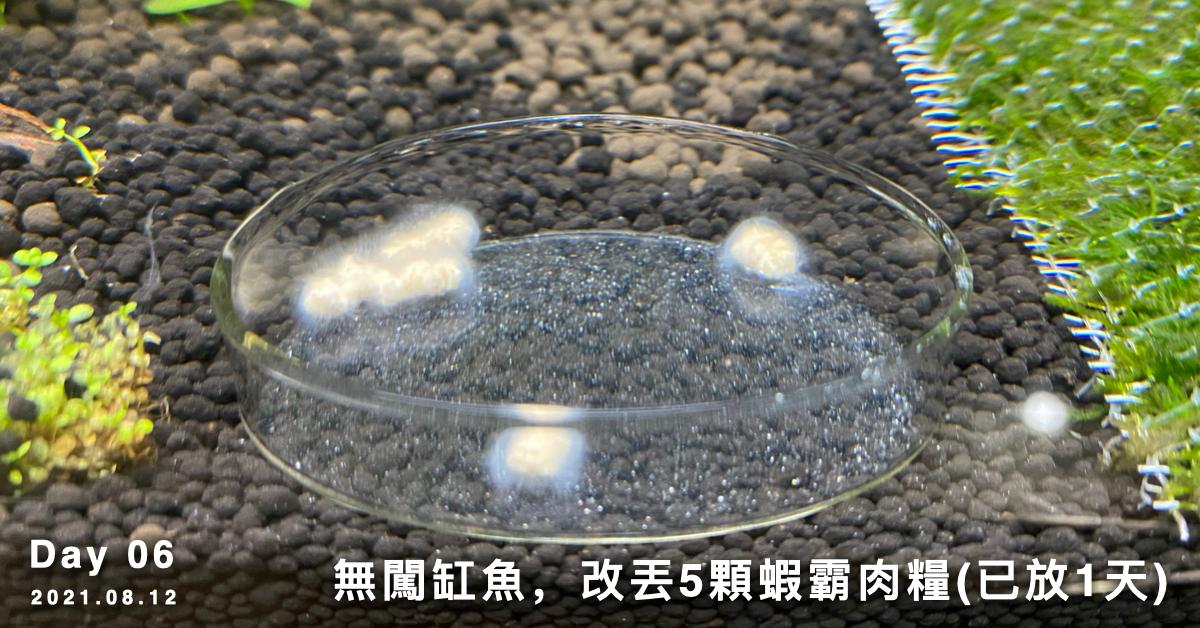
No cycling fish yet, so I dropped in five Xia Ba meat pellets I’d feed later. By the next day they were wrapped in thick biofilm; the longer they sat, the bigger the clump—eventually the pellet could “fly” off the dish.
Literally fly—to somewhere very hard to find.
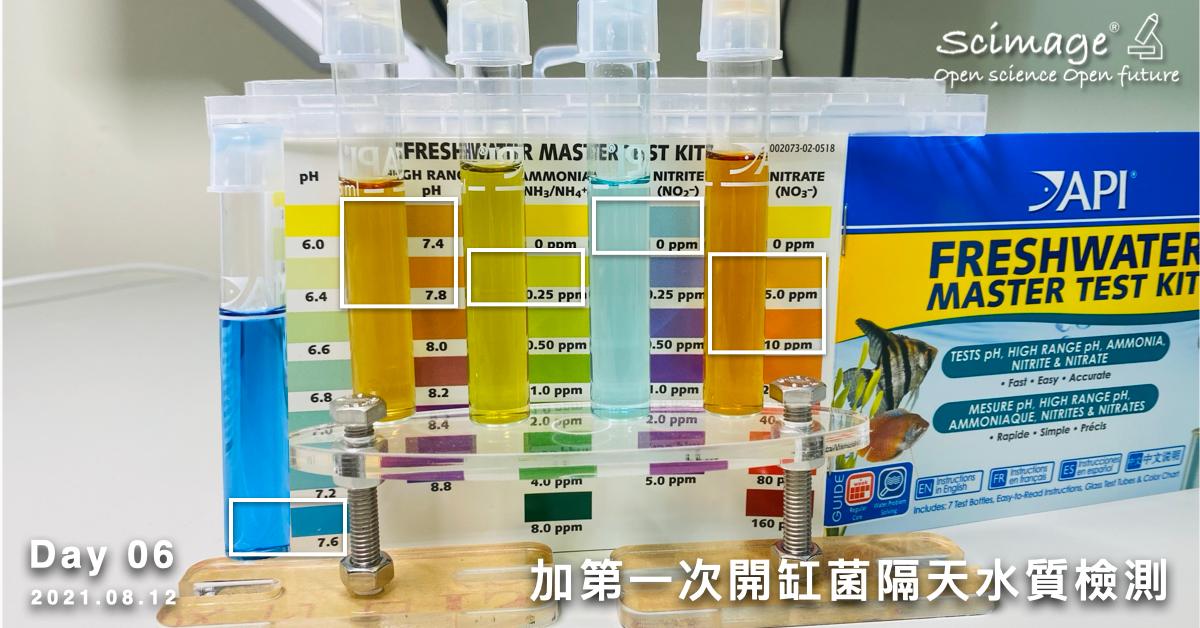
Water tests the day after the first starter dose: pH ~7.6, ammonia (NH₃/NH₄⁺) ~0.25 ppm, nitrite (NO₂⁻) 0 ppm, nitrate (NO₃⁻) about 5.0–10.0 ppm (original log: 5.0 ~ 0.10).
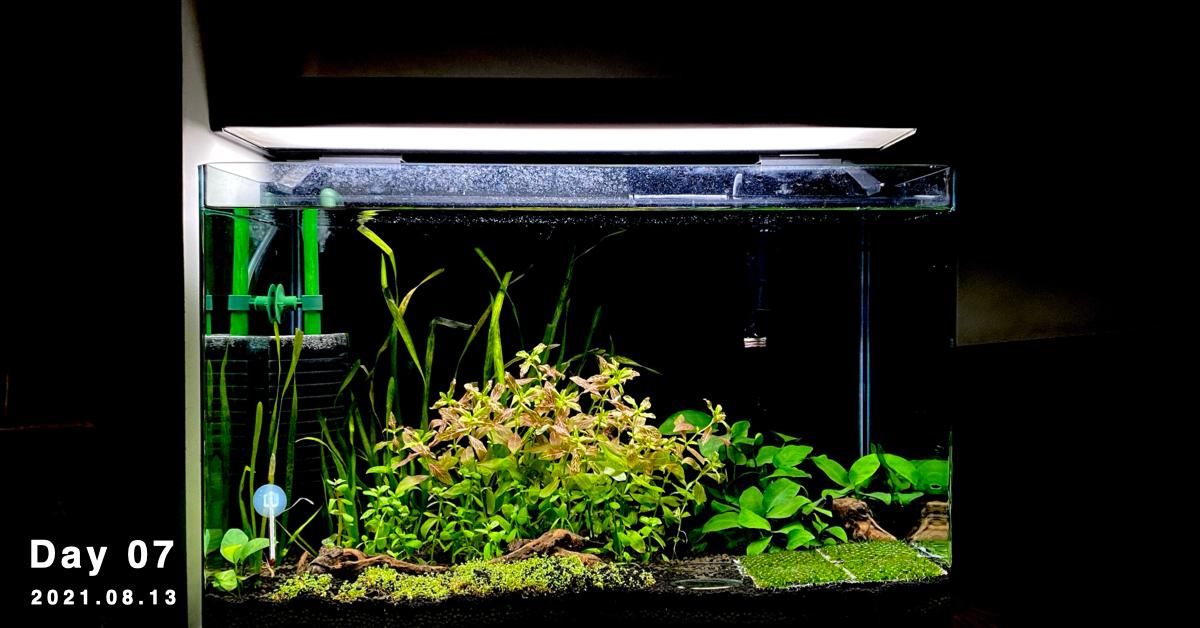
Night seven of cycling: watching the scape take shape, plants growing day by day—shrimp tank, please become one that raises lots of baby shrimp!
Day 8
Second starter dose—this time I watched flow direction. Again 1.2 g in a bottle, shake well, pour into the left HOB pad, then sprinkle shrimp waste from the nano tank.
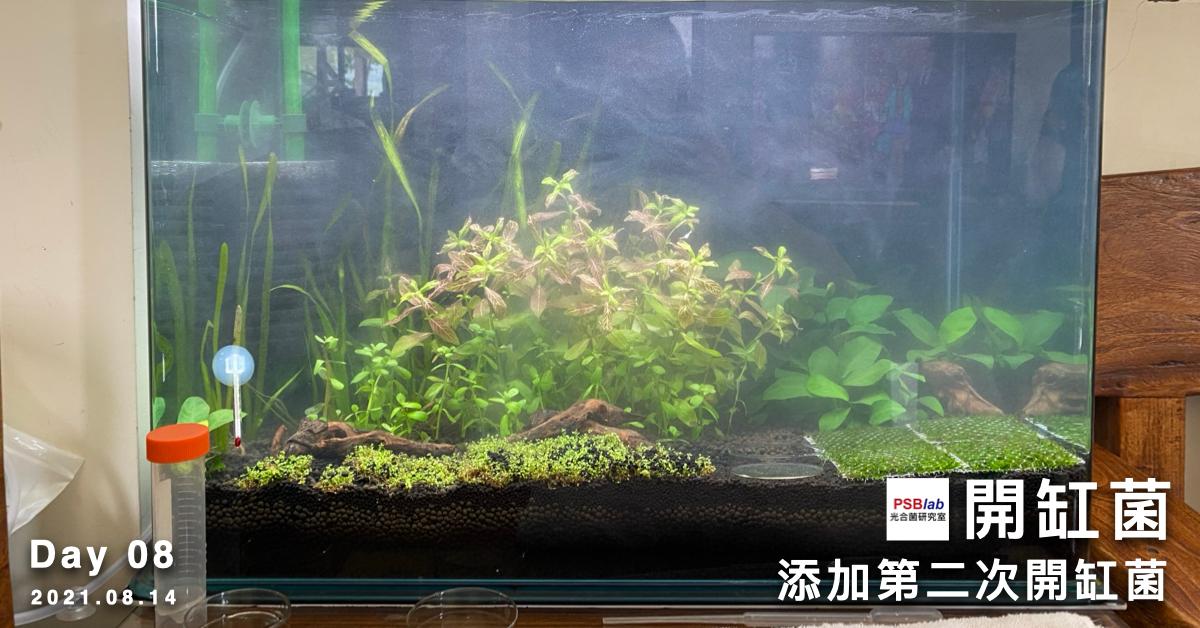
Same day: something floated on the surface—suctioned it up and they were mosquito larvae. Yikes—must not become a mosquito tank.
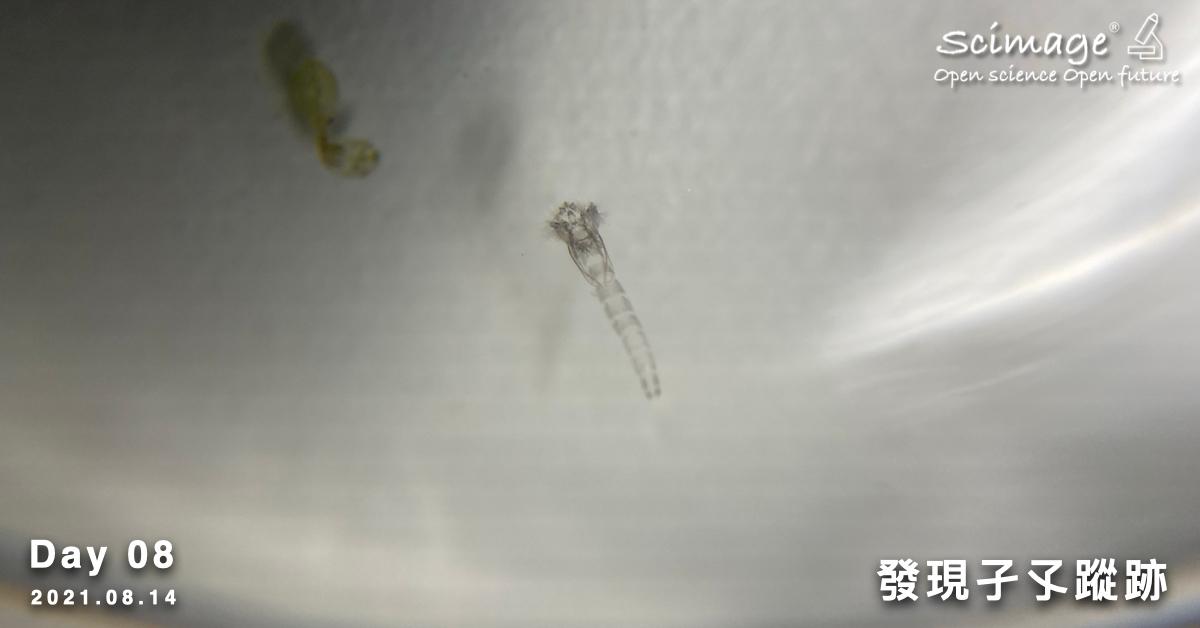
More and more white specks appeared on the glass—smaller than snail eggs. Time-lapse footage made them look like clumps of bio-fluff.
Day 10
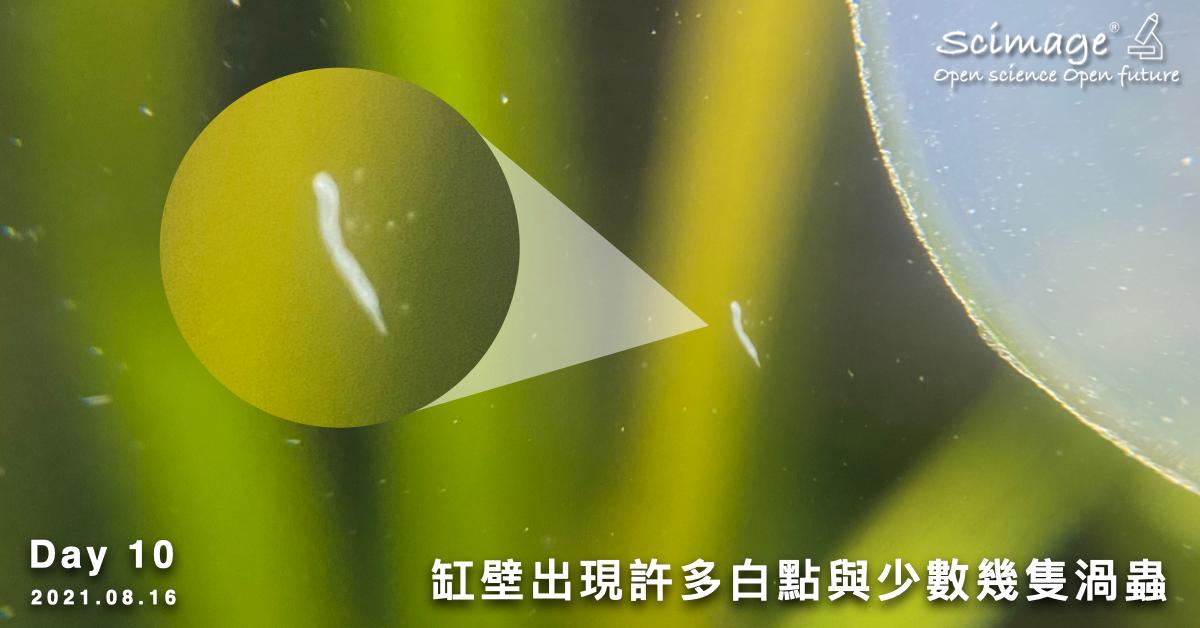
Day 10 of cycling: odd things on the glass. First, planarians—very few, easy to miss—but better removed. During cycling I used manual removal: see one, pipette one.
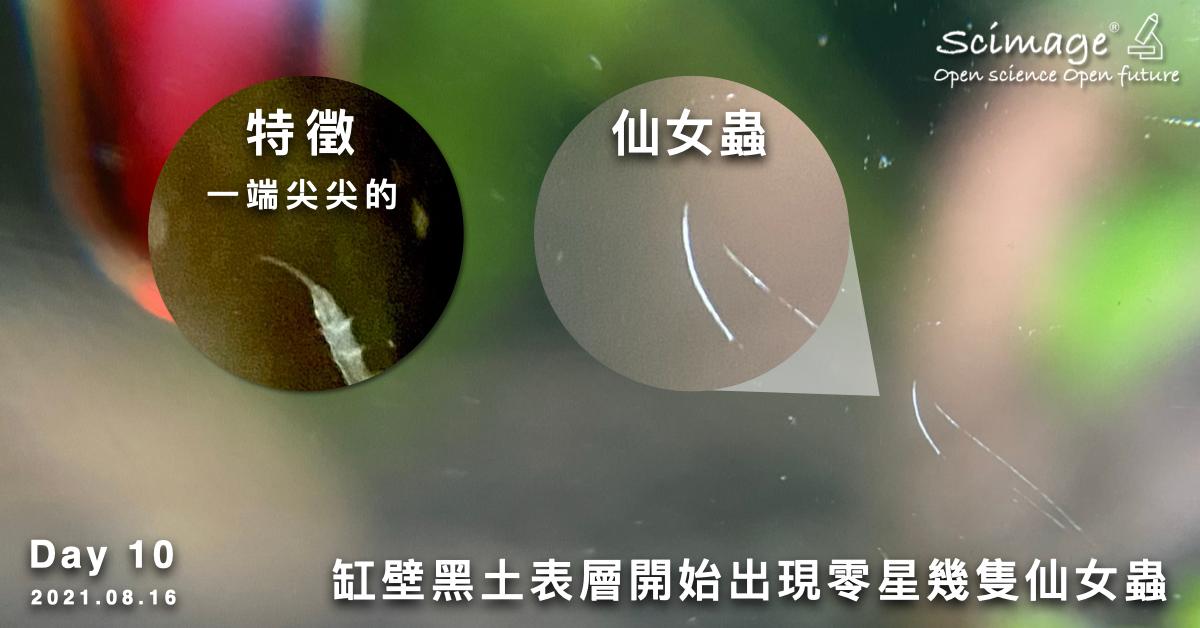
Then oligochaetes (aquatic worms): they seem to show up when water is too rich; waste from another shrimp tank might have introduced them too. Same tactic—pipette when seen.
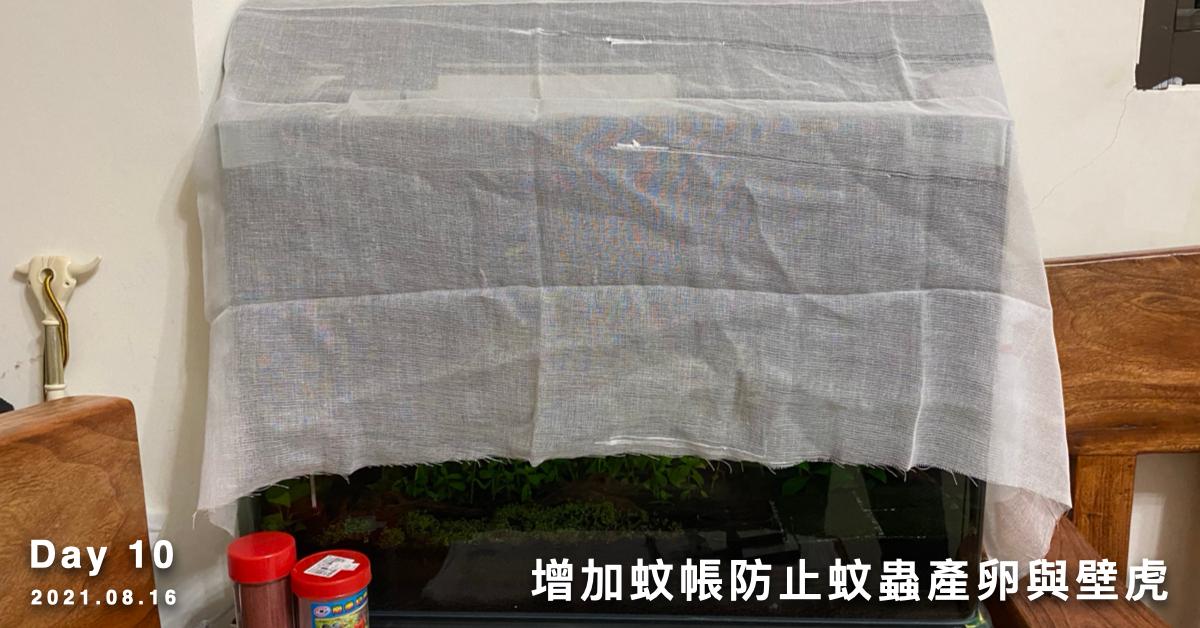
Shrimp keepers avoid meds when possible; for pests, biological and physical control feels safer. The tank stayed covered with mosquito netting most of the time—it breathes, so gas exchange wasn’t a worry.
Day 12
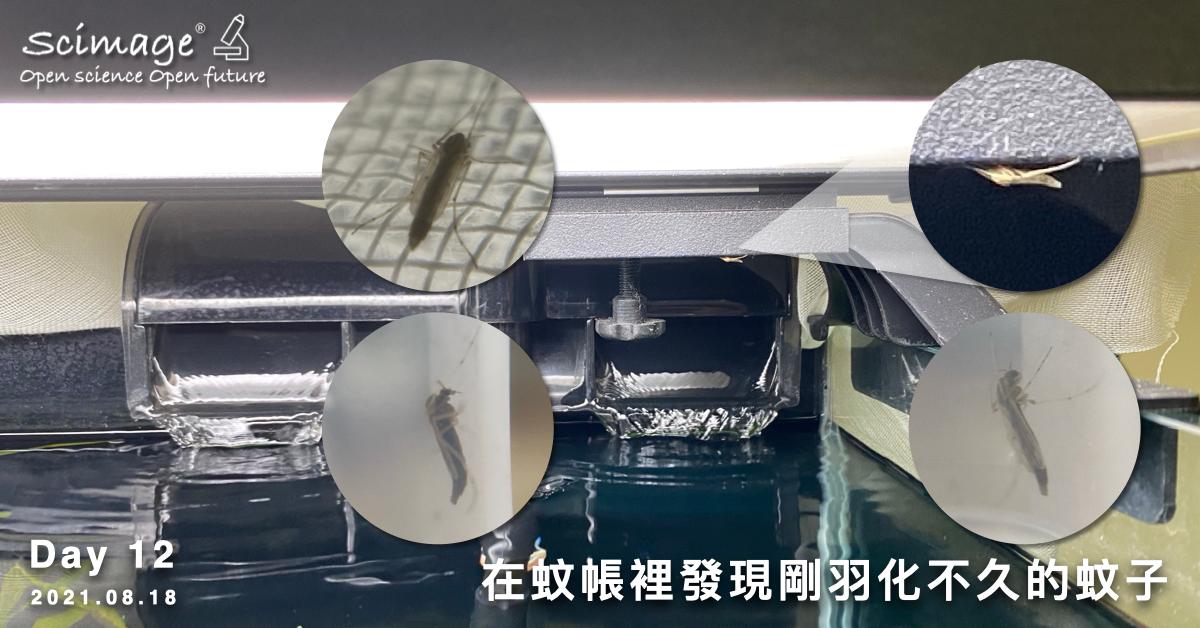
Netting went on yesterday; lifting it today I found two adult mosquitoes! Is this net useless? Actually those two had probably been in the water waiting to emerge. Aside from them, I didn’t see more mosquitoes inside through the end of cycling—so the net likely helped.
Fed the cycling fish on no fixed schedule (sometimes I forgot), alternating two foods: the original fish flakes and Xia Ba meat pellets. The danios love the pellets too—and they guard food (eye-opening!).
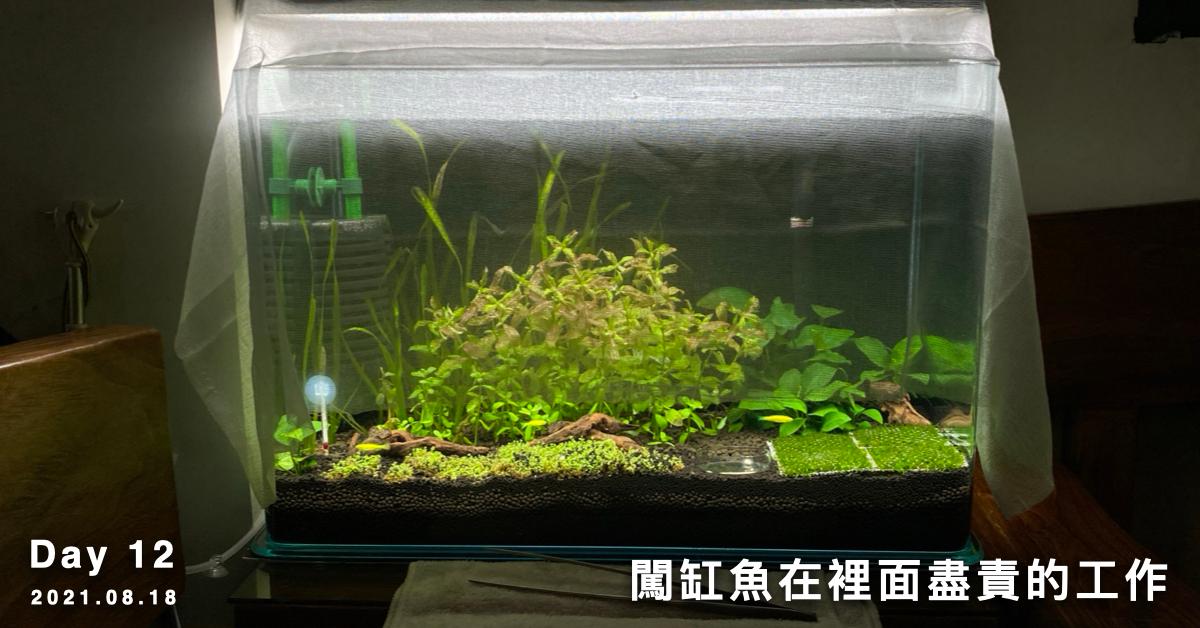
Only three danios, but one is a bully: when Xia Ba pellets appear it won’t share a bite until the other two are chased off, then it comes back to eat.
The other two scheme: when the bully splits a pellet, one snatches half and hides in the plants to eat in peace.
The third creeps across the HC “prairie” trying to ambush—but forgets the glass in front of the food. It stares at the pellet, can’t reach it, circles the dish, and gets chased off again.
Day 13
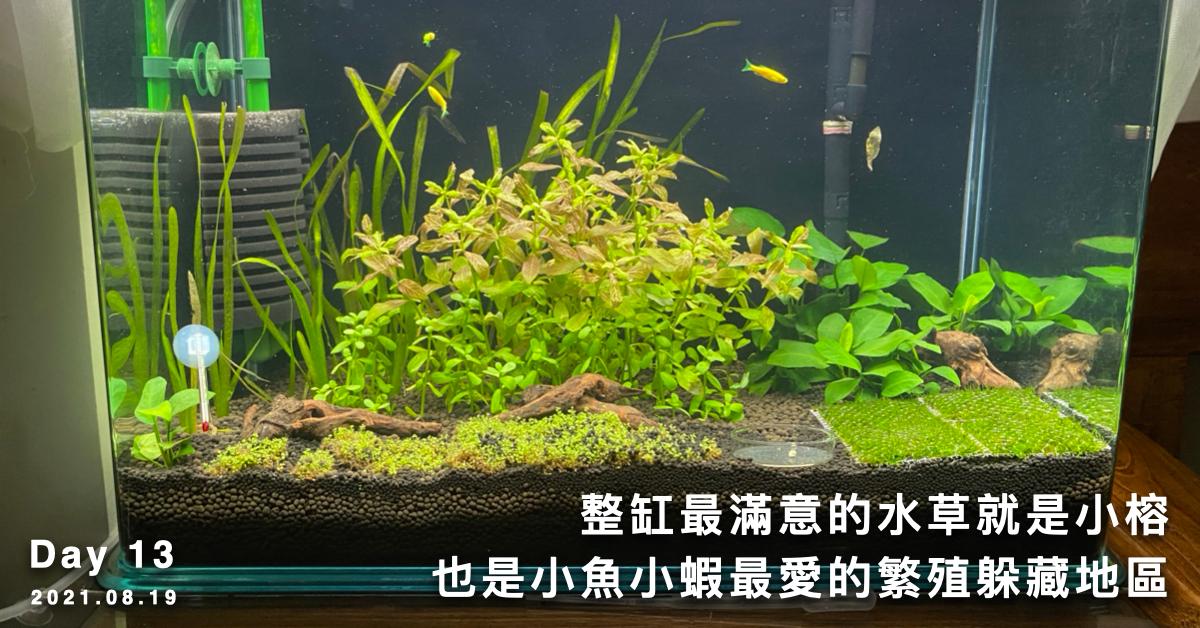
These three danios lived in a one-foot tank before. In the two-footer I learned how fast they swim—dodging obstacles, weaving through the mid-tank “forest,” even threading the dense Anubias thickets with ease.
I remembered a line from some site: “Keep fish in at least a two-foot tank at minimum.” It makes sense—~60 L of water holds temperature near 28 °C even in summer, and water quality is easier to manage. No wonder the EU sets minimum sizes for keeping vertebrates—there’s real reasoning behind it.
Day 15
Shrimp are benthic—they live at the bottom of rivers and streams. They prefer gentle flow; small species like neocaridina need slow current. *Illustrated Guide to Freshwater Fish and Shrimp of Taiwan, Vol. 2* notes that larger native shrimp appear in calm reservoir margins. A similar environment may be friendlier for them.
Roughly how inflow and outflow look in this tank—see the image below.
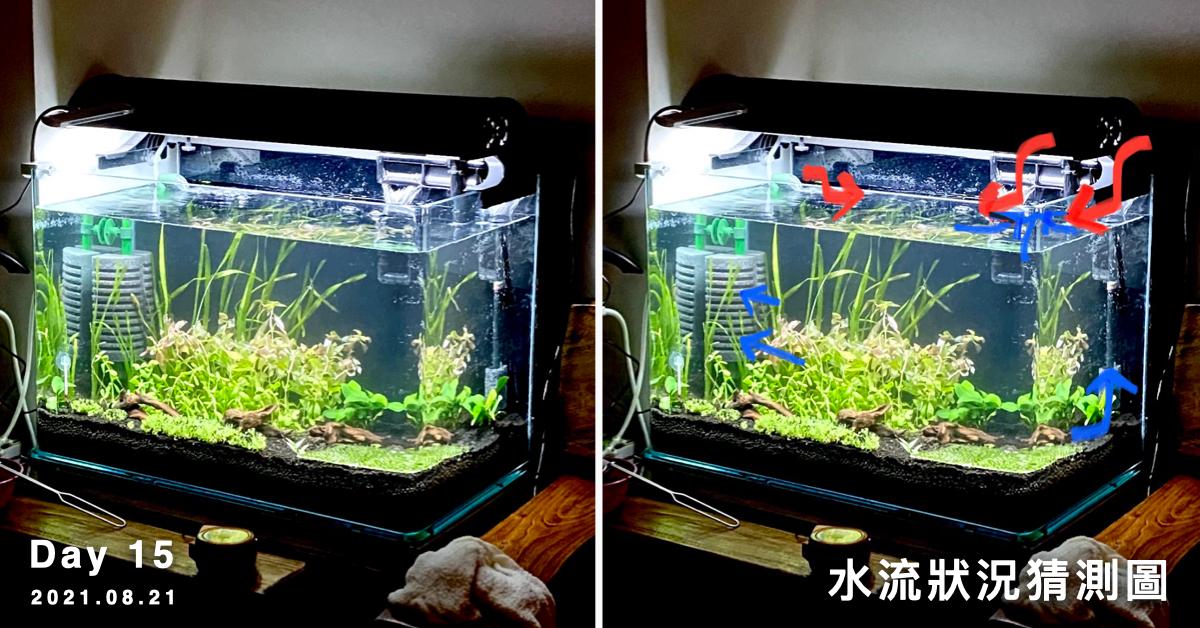
Each time I dosed starter or nitrifier powder I watched where water moved, to remember spots that might trap waste and leaves when I clean substrate later.
Video of actual flow: https://www.youtube.com/watch?v=-XpaqNeLWgI
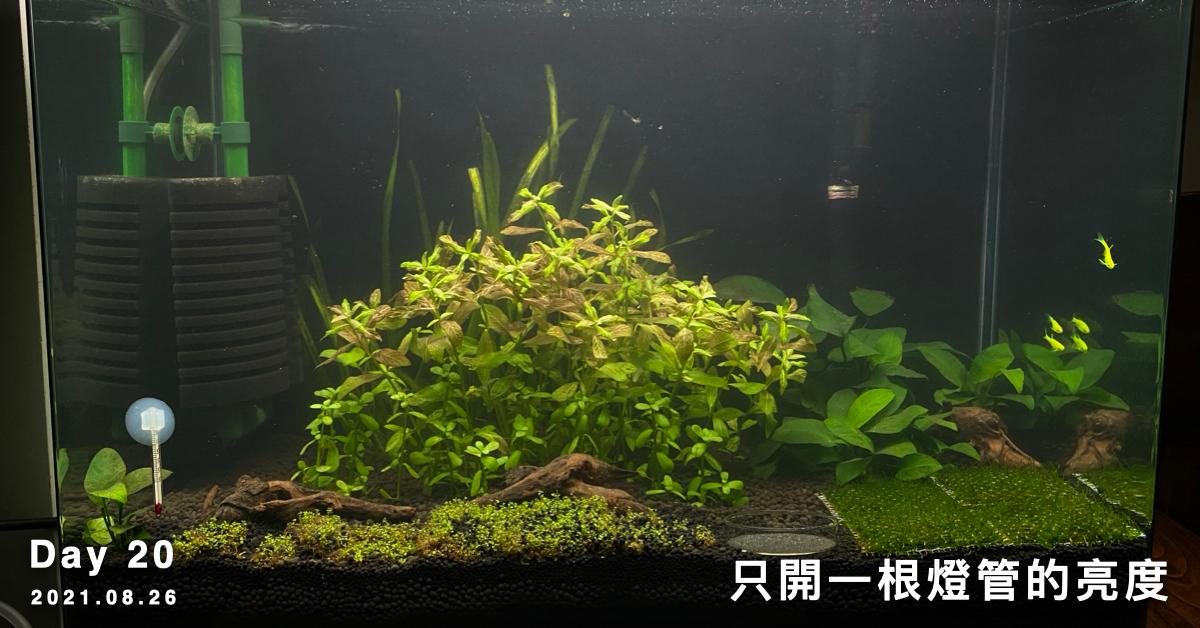
Day 20
The red-leaf stem “forest” in the middle kept toppling and needed propping. The HC in front yellowed more, with a few green leaves left—probably the emersed-to-submersed transition?
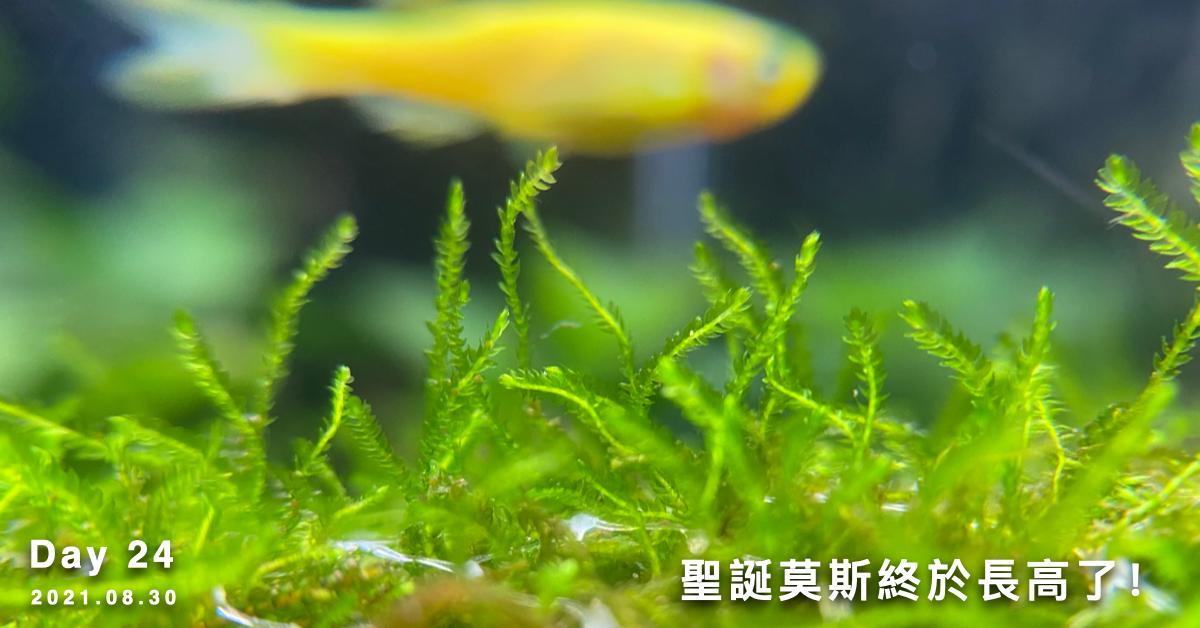
Day 24
After all this time, Christmas moss finally grew upward—hopefully a shrimp prairie someday.
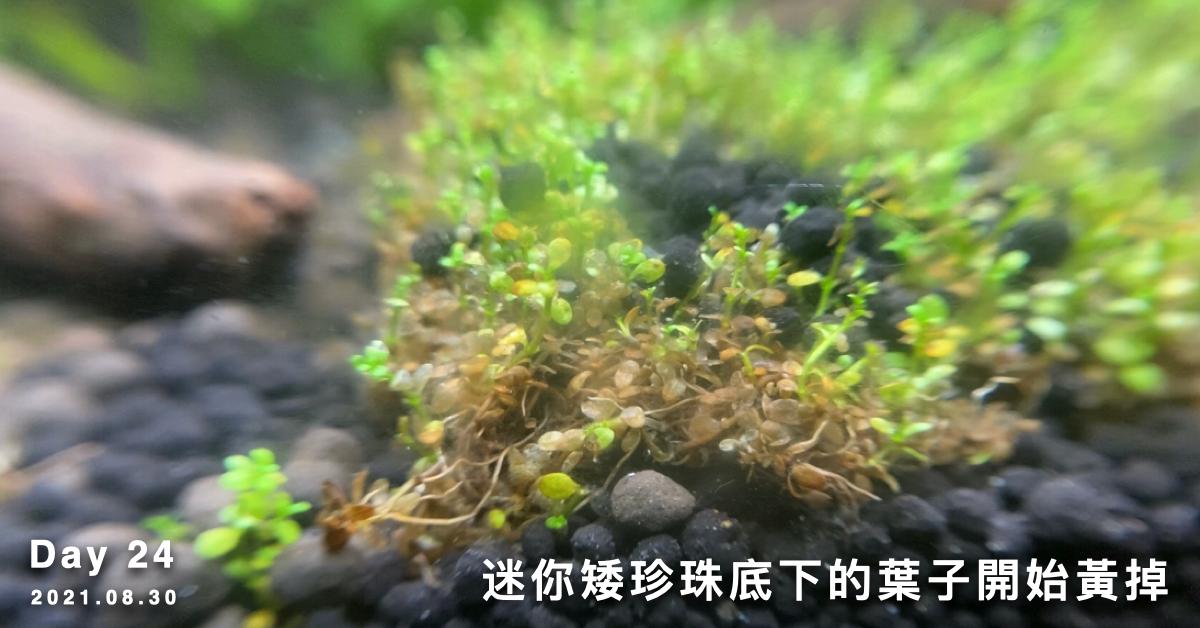
Lower HC leaves yellowed faster—maybe because I laid whole mats in, fearing planting failure, so almost no floating yellow leaves—if any, the whole mat lifted. HC is exhausting without CO₂ injection—that’s the real reason.
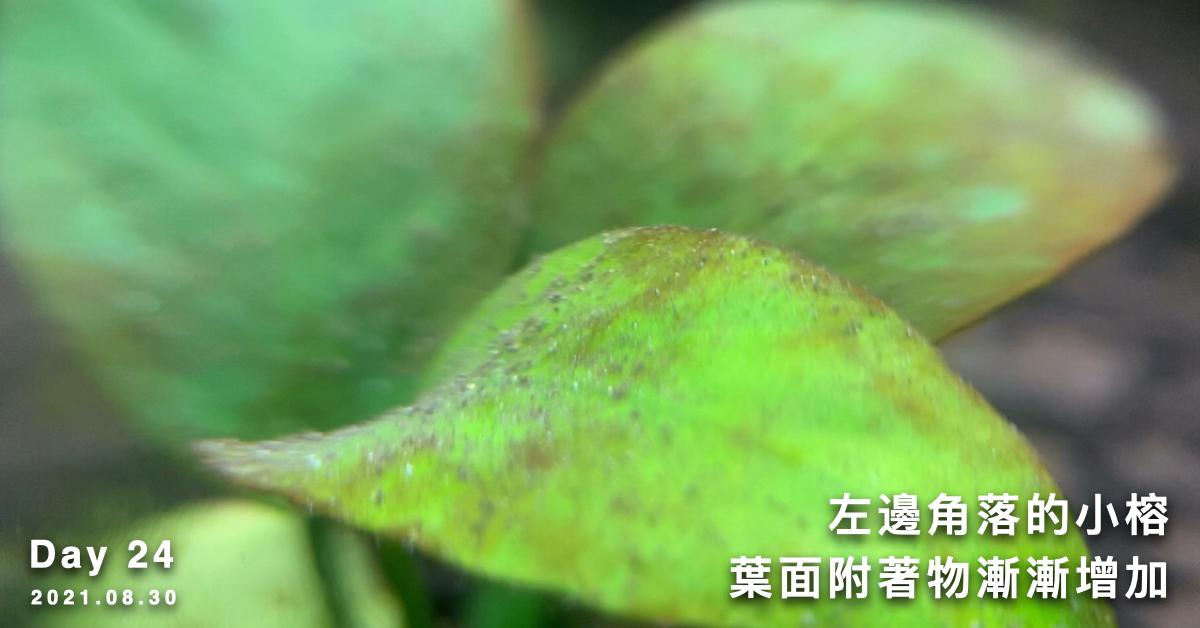
Other plants also grew fluff and algae on leaves; once shrimp go in they’ll clean it—no need to worry yet.
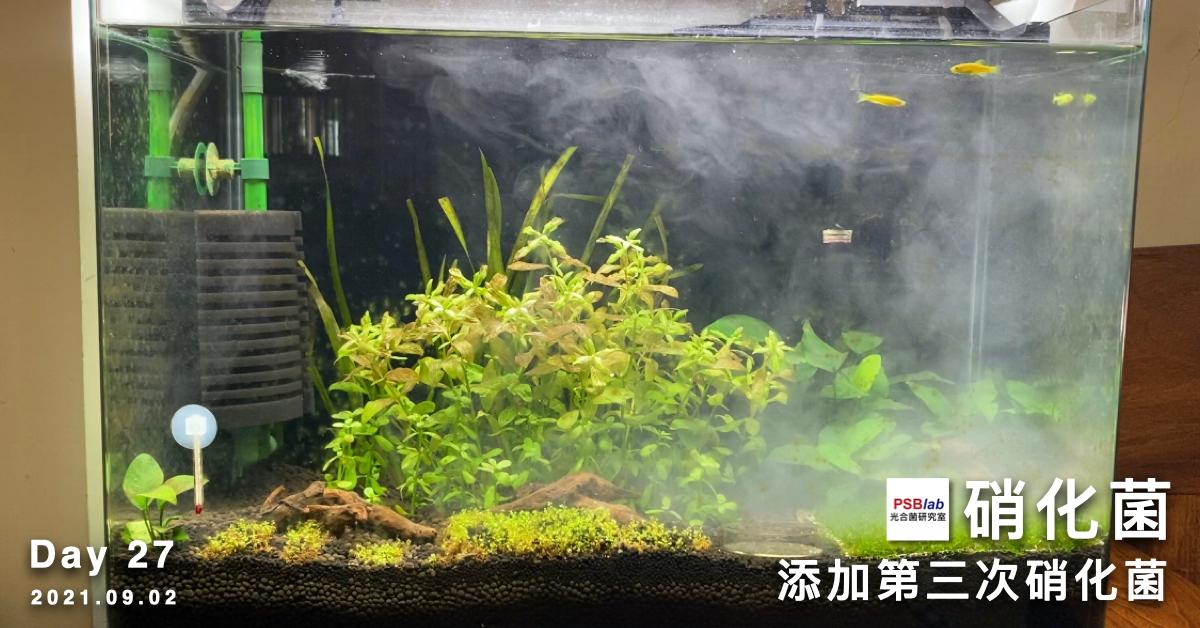
Day 27
One more nitrifier dose and a week later I can add shrimp. The wait is brutal—but don’t rush. Adding shrimp before the cycle finishes means losses later.
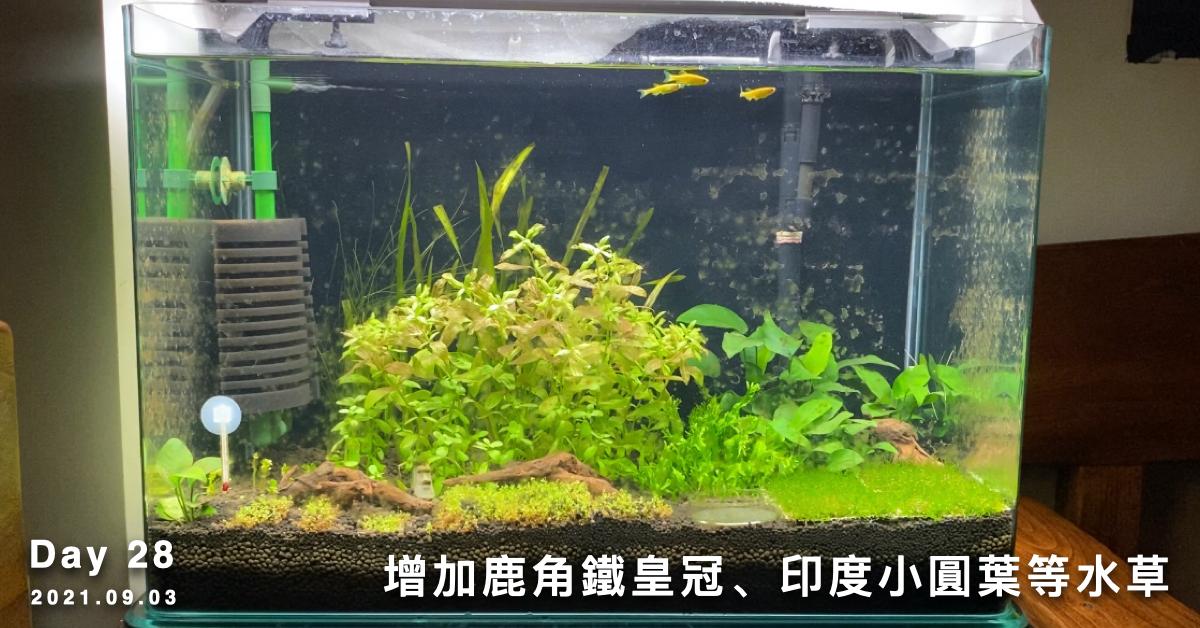
Day 28
All plants so far came straight from farms—maybe luck—but no black brush algae yet. At the fish street I bought shrimp and two Microsorum ‘Windelov’; their bases were tangled in black and green algae with roots invisible. Besides alum dipping, I manually picked algae with tweezers before planting, then used 2.5% glutaraldehyde.
Day 29
Watching HC yellow daily, I asked plant groups—turns out the carpet was nearly dead (sob). Without CO₂, emersed transition rarely succeeds. I removed it all overnight and left emersed growth, hoping the HC survives.
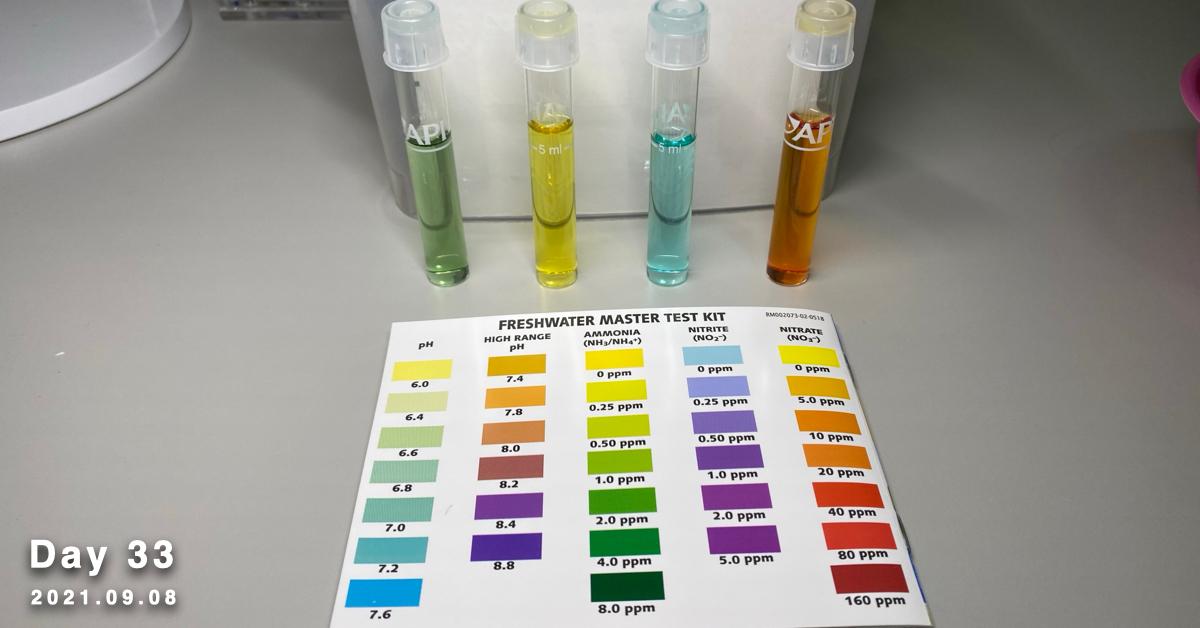
Day 33
Nitrite read zero—livestock can go in. Tomorrow I’ll decide which shrimp to add, or wait.
Day 34
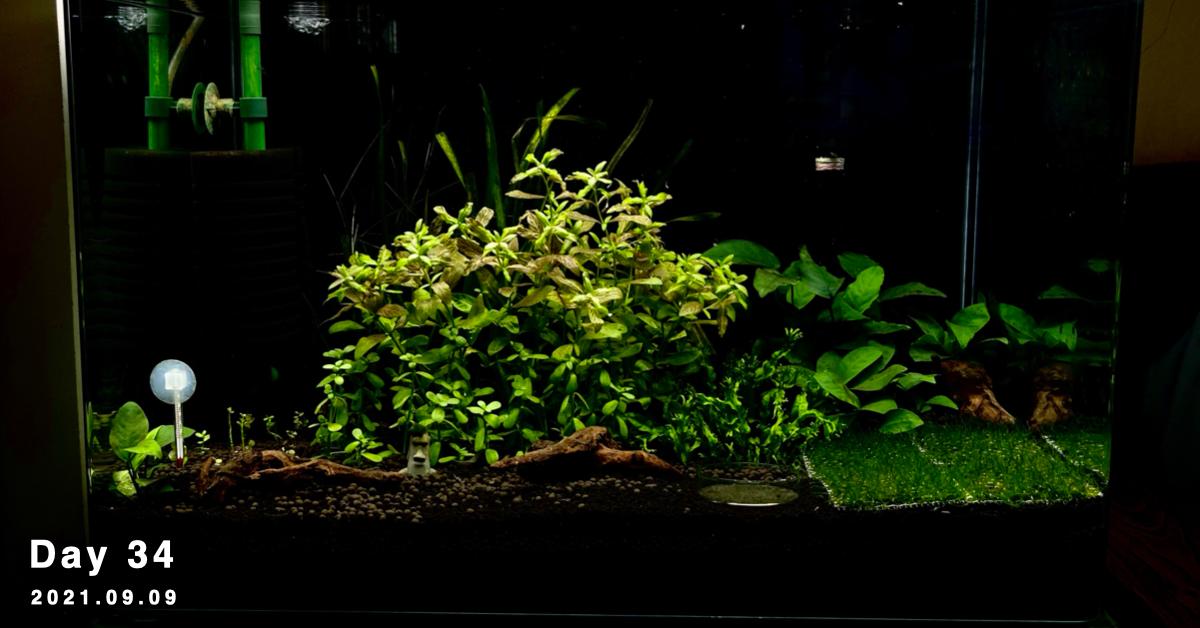
Removed three cycling fish (yellow GloFish danios), added 80 ml natto bacteria, dreaming of a tank full of plants and cotton candy algae. In the afternoon I pulled algae threads from the glass for the phone microscope. After removing the danios the dynamic changed—I spotted one fry; more eggs might hatch—wait 72 hours. Late night I still only saw one fry. Aquatic worms started swimming in the water column.
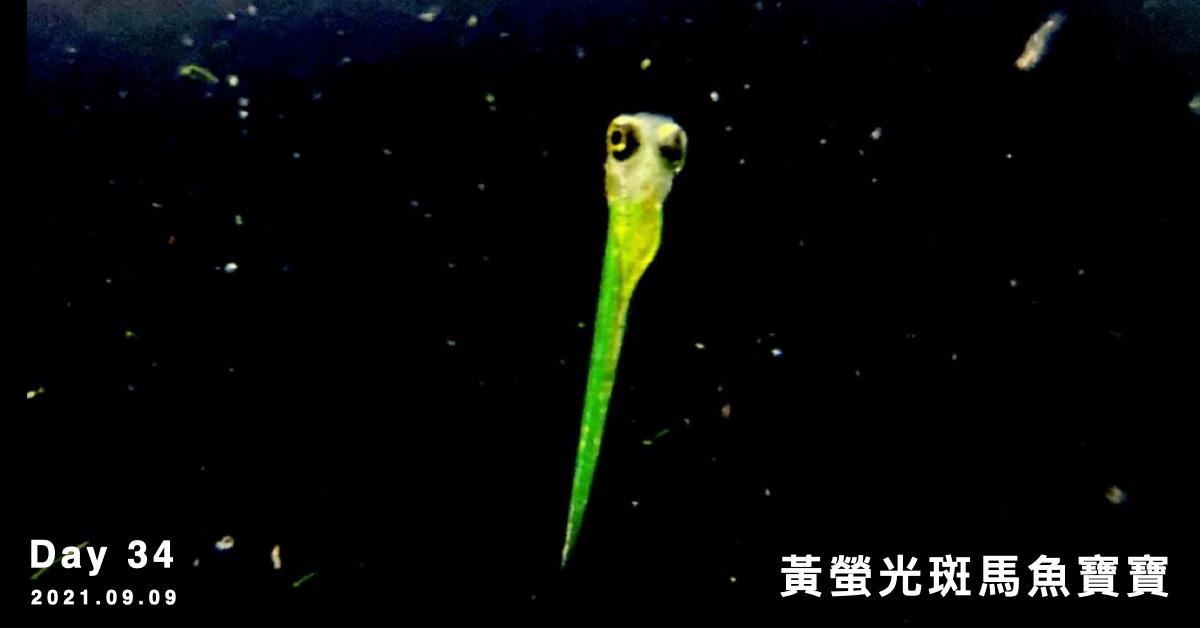
These GloFish danios nipped each other at first; I got numb and ignored them—then they paired off and spawned. This is a shrimp tank—why baby fish?!
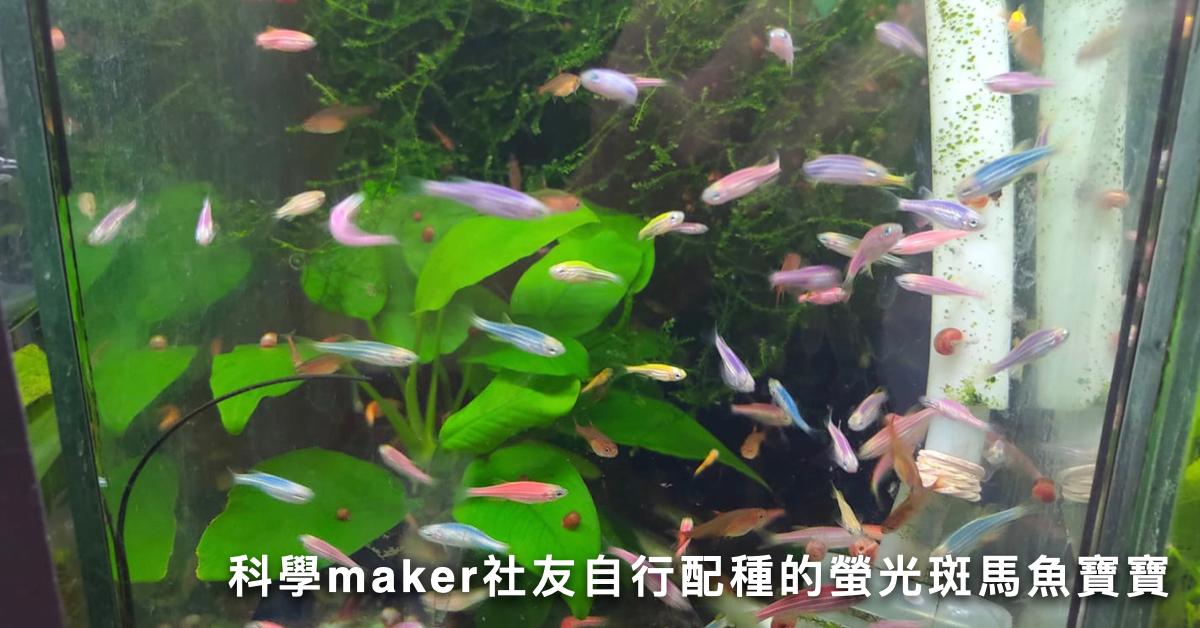
Community members say these lines are like a palette—cross different types and fry show pink, purple, and other odd colors.
Day 35
I wondered all night why only one fry—eaten? Morning still showed one. Fine—probably eaten. Time for shrimp.
I moved the nano tank shrimp into a plastic tub, dripped main-tank water in with a drip tray until 1:1 volume, then netted them one by one into the two-foot tank.
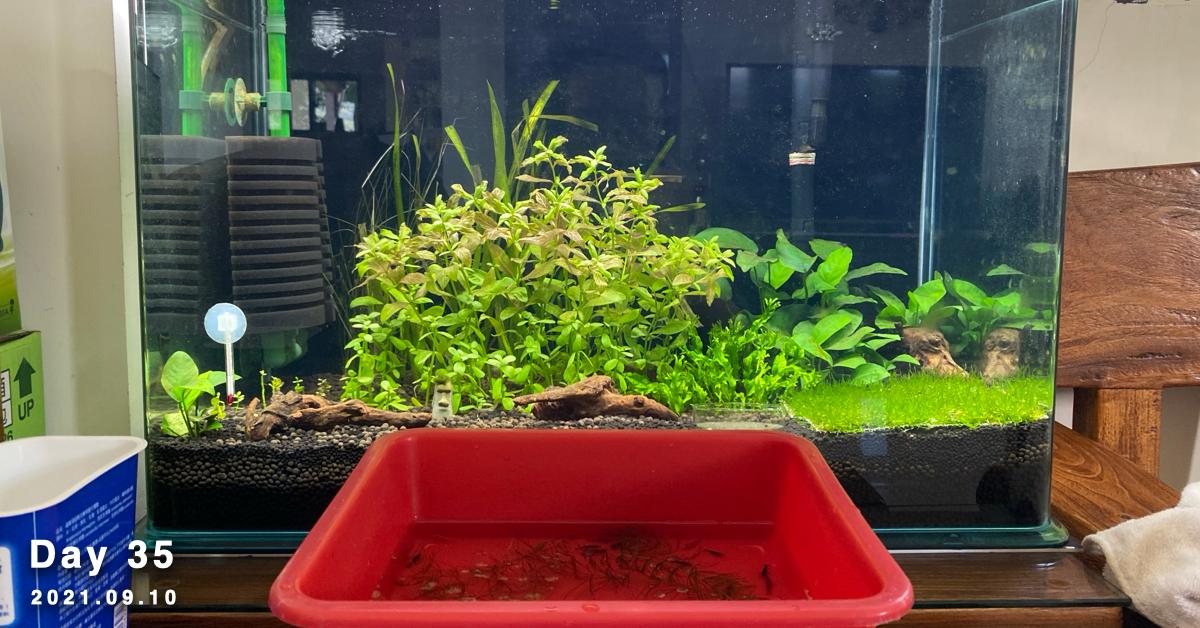
Move-in day! Here’s to a comfortable new home—no more nano tank.